From West Baltimore to Stadium Contracts: Antonio McMillion on Building a Real Estate and Construction Empire
From West Baltimore to Stadium Contracts: Antonio McMillion on Building a Real Estate and Construction Empire
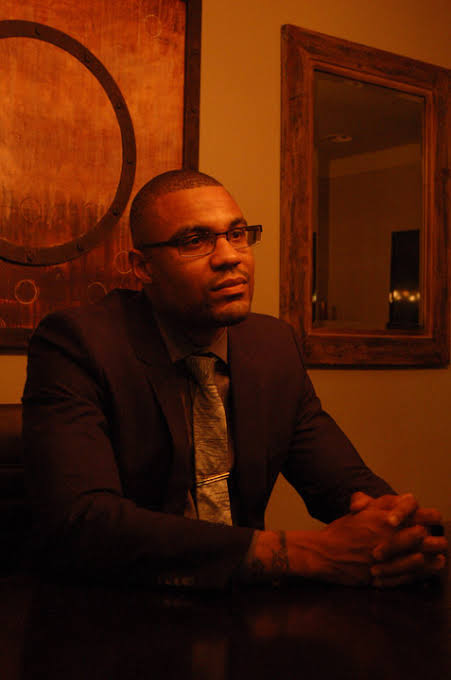
Antonio McMillion grew up in West Baltimore, played professional basketball overseas, and came home at 28 with $20,000, a 1999 Buick Park Avenue, and no work history. Fifteen years later, he runs MFP Management and Construction and a real estate portfolio, and he says he is leading the redevelopment of several once-struggling Baltimore commercial districts.
He joined a recent discussion on Lefty's Space on X to walk through how he got here. What follows are the highlights, edited for length and clarity. Business claims and credentials are McMillion's own, as stated in the conversation.
Where He Comes From
McMillion, 43, was born and raised in Baltimore. He grew up with a single mother and spent some time in a group home. He describes his story as "no different than a lot of brothers that grew up in challenging backgrounds."
Basketball was his way out, but it started late. He didn't play organized ball until his freshman year of high school, after a neighborhood conflict left several people dead in one summer. His mother found a way to move the family to Randallstown in Baltimore County.
"I look at that as how my life could have gone another direction," he said. Of the people he grew up with in that neighborhood, he says only he and one other man, former NFL player Jason Murphy, are still alive.
In Randallstown, McMillion grew from 6'3" to about 6'5" and got good quickly. His public high school, with no recruiting, won roughly five state championships in nine years. He was named Baltimore County Player of the Year, the same year Carmelo Anthony took Baltimore City honors. Rudy Gay, Gary Neal, Joey Dorsey and Josh Boone were among the players he came up with.
He started at Central Connecticut State and then transferred to Maryland Eastern Shore after his mother got sick, a compromise that kept him closer to home without putting him back in his old neighborhood. He majored in English and earned all-conference honors.
Six Years Chasing the Game

No NBA draft call came, but McMillion says he knew he could play overseas. He was about 225 pounds with a 44-inch vertical. His first stop was Uruguay, where he believes he was the first American to play in the country. "That was the biggest culture shock," he said. "Nobody spoke English."
Over about six years he bounced between teams and countries. "When you play professional ball and you're not a superstar, it's choppy," he said. "I was chasing a dream."
The Late-20s Crisis
The turning point came on a Skype call with a friend, former overseas player Antoine Jordan, as the two compared the places basketball had taken them. When he hung up, McMillion took stock. He was 28, six credits short of his degree, living with his mother, and had never held a job under his own name.
"It just scared the hell out of me," he said. "Am I going to be that dude at the basketball court talking about who he was?"
Around then, his younger sister, now an attorney, sent him a care package overseas as she did every year. This time, instead of hot sauce and magazines, she sent two books: Napoleon Hill's Think and Grow Rich and Stephen Covey's The 7 Habits of Highly Effective People. She was 15.
McMillion read Think and Grow Rich and decided to retire from basketball. What struck him was that the book "broke down success in a way that an athlete or a common person can understand," and made it feel reachable. With 7 Habits, he realized he already practiced about five of the seven.
"Where I come from, you either get a 9-to-5, you work the system, you hustle, or you're lucky enough to play sports and get out," he said. "There were no business owners. Before I read that book, I thought business owners were extraordinary. It's just a regular guy willing to put some skin in the game."
Zero Dollars Raised
His first move did not work. McMillion wrote a 30-page business plan and tried to raise $10,000 from friends and family, many of them athletes he'd met along the way. He offered 50% of the company. He says he raised nothing: "I couldn't get a goddamn penny."
He was discouraged for about five minutes, then decided to fund it himself. He asked his mother if he could live at home for another year without paying rent. He started a small clothing brand and took the only nine-to-five job he's ever held, as a substitute teacher. He skipped haircuts for nine months and ate ramen. By the end, he had $25,000.
The First Flip
That wasn't enough to buy and renovate property outright. A city program was selling Baltimore homes for under $5,000, but the repairs ran closer to $100,000. With little credit and no track record, McMillion turned to hard money lenders. He emailed four of the biggest in Maryland and asked for meetings. They laughed, he says, and told him he could have applied online.
The terms were steep: four points and 14% interest. This was around 2010 or 2011, coming out of the housing crash, when lending was tight and houses were cheap.
His first project was a house on North Athol Avenue that he bought for about $4,500. He budgeted $70,000 for renovation and spent about $90,000. He expected it to take two months, and it took six. It sold in three days, he got his money back, and he cleared $26,000.
"I felt like a million bucks," he said. "You couldn't tell me anything."
The next quarter he did two properties, then four. By his second year he was working on about ten at a time. He had no mentor. "I was the first one," he said. "I'm the one that took the arrows." He says other athletes and entrepreneurs later sat down with him before starting their own real estate projects. He also says he made $1 million in his first year in the business.
The Drywall Audit That Built a Construction Company
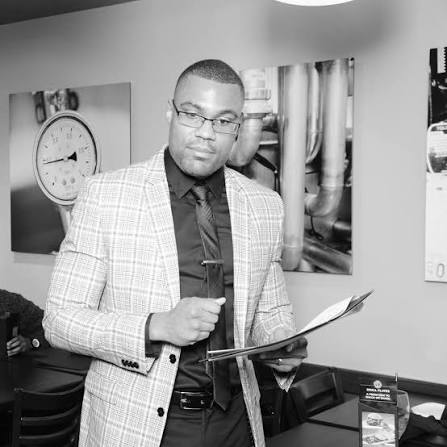
After about three years, McMillion brought in college teammates and was doing eight to ten projects a year. But his spreadsheets showed a problem: nearly every project was running 15 to 20% over budget, costing him around $20,000 each time.
He bought estimating software, quietly, and began pricing jobs himself before his contractor gave him numbers. On one walkthrough, the software said the drywall should take 180 sheets. His contractor said 250.
"I fired him immediately," McMillion said, "and then I went and started my own construction company."
By his math, that overrun was worth $200,000 to $300,000 a year at his volume. Bringing construction in-house raised his margins by about 20%. His lenders would only release construction funds to licensed contractors, so he got licensed. Then someone told him about minority business certification, which opened the door to government work.
Today, he says, the construction company has grown larger than the real estate company. His team has worked on the locker rooms at Camden Yards, the luxury boxes at M&T Bank Stadium, and a hall at a Maryland casino resort.
How the Company Is Built
A few structural choices stand out from the conversation:
- Each property is its own LLC. "You shouldn't put all your properties under the same LLC, because that opens you up to liability." If a tenant is injured and sues, a lawsuit can only reach the assets in that one LLC, not the whole portfolio.
- Certifications are a business strategy. He holds a federal 8(a) certification, a Maryland state certification, and certifications in multiple counties and the city. Each is tied to a specific area of expertise, such as finished carpentry and residential building, which he says narrows the competition for the work.
- Two skills run everything. "There are only two places you make or lose money on any real estate deal," he said. "You lose money if you buy at the wrong price, and you lose money if you underestimate the construction." His goal was to keep both in-house and become an expert at each. He says he can now eyeball a new-construction project to within $5,000.
Advice for First-Time Investors
Asked what someone with $10,000 to $15,000 should do, McMillion gave a short list:
- Get your credit to 700. "If you're not disciplined enough to get your credit right, you're not disciplined enough to start your first investment."
- Don't swing for a home run. Pick a cosmetic renovation, "lipstick on a pig," with paint, flooring and doors rather than a full gut rehab. Three small wins in a year beat one big loss. Many people never invest again after their first deal fails, he said.
- Buy where you know the block. Crime and conditions can change from one block to the next, and a map won't tell you that.
- Expect to use hard money. It's expensive, "but bet on yourself."
- Get three bids and don't announce you're new. "That's like going to a mechanic and saying you don't know anything about cars."
He also steered an audience member in Brooklyn away from buying in New York. Prices, regulations and rent control squeeze returns, he said, with cap rates around 3% in New York and D.C. versus up to 12% on some of his Baltimore properties. He suggested up-and-coming areas of Philadelphia, New Jersey or Delaware instead.
Set-Asides: His Advice to Aspiring Contractors
Much of the Q&A centered on minority business certifications. McMillion's pitch is that governments and large projects carry set-aside requirements, and that certified firms can win work because of it.
He pointed to the roughly $700 million Pimlico racetrack renovation, which involves state tax credits. By his account, Maryland's set-aside for that project is 29%, meaning that share of the spending must go to certified Maryland minority businesses, or the project risks losing its credits.
His advice for anyone starting out in a new city:
- Open an LLC.
- Find out what the local minority business certification is called (in Maryland, the MBE) and what percentage of spending is set aside.
- Look up the city's annual construction budget, multiply it by the set-aside, and divide by the number of certified firms in your trade.
- Start with state or local certification, which is easier to get, before pursuing federal certification.
"You have to do your homework," he said. "You can't skip it. You have to be a reader."
Rebuilding the Neighborhoods He Came From
McMillion says he spent years complaining about money poured into Baltimore that never produced finished projects. About five years ago, he decided to stop complaining. "I'm the best person suited to do all of this," he said. He says he will never run for office, but he does work with Mayor Brandon Scott and community groups.
Here is what he reports so far:
- West North Avenue: Redeveloped seven businesses in two years, including turning a former drug-use garage into a fashion studio, a funeral home into a podcast studio, and a vacant building into a fresh market. A building next to Tank's boxing gym became a spa.
- Park Heights: Redeveloping storefronts for about 51 businesses around Pimlico, paid for by the state and city, at no cost to the owners. He says the model follows what was done around Churchill Downs in Louisville.
- Vacant homes: Baltimore has roughly 4,600 vacant properties, he said. He argues for demolishing the worst ones, turning them into green space, and building modular homes where it makes sense. Big developers won't do scattered lots with four vacant homes on a block of seven residents, and small developers can't stick-build dozens of houses. In his model, the city pays for the modular shell and a contractor finishes the interior.
- Workforce: He works with a city-backed program, Project JumpStart, that trains people coming out of prison and from underserved neighborhoods for 12 months. They then work for him for two years while earning a finished carpentry certification. He says the city covers their wages, making about 60% of his labor free.
- A Loudoun County data center: He is part of a development team on a project he calls his "home run swing." He says it could be one of the largest data centers in the county. "If you see me in all gold like a king in Africa, you'll know the data center hit."
He says the work earns him respect on the block. When someone dies and leaves a property, he gets a call. When taggers hit every building on a street, they skip his. "That's not because I'm some tough guy," he said. "It's because that's Mr. Tony's property. You get more respect being a solid guy than being a tough guy."
The Bigger Point
On the question of whether Black Americans invest in real estate, McMillion said you don't have to be a celebrity to do it. "You shouldn't have to be Jay-Z. You know your neighborhood. You know the ends of the city. It should be you and us."
His own summary: born and raised in Baltimore, humble beginnings, five or six years of pro basketball, then a company that he says has earned a spot on the Forbes Next 1000, a Goldman Sachs 10,000 Small Businesses graduation, and a place among America's fastest-growing 5,000 companies.
And his answer when asked for the last word? "I'm an open book."
Recorded on Lefty's Space on X. This article condenses a longer conversation; statements about business results, certifications and awards are McMillion's own.
This is an opinion piece. It reflects the writer's view and is not presented as established fact.

From the Floor
0 comments. Link a source for any factual claim. Read the guidelines.
No comments yet. Start the conversation.