Black Voters Overcome Republican Redistricting as Southern Democrats Defy the Political Map
Black voter participation helped Democrats overcome Republican-drawn congressional maps in Alabama and North Carolina, exposing the limits of redistricting strategies and demonstrating the enduring influence of Southern Black political organizing.
The Political Maps Changed. Black Voters Changed the Outcome.
Republican lawmakers in several Southern states entered the 2026 midterm elections believing newly drawn congressional boundaries would improve their chances of winning additional seats.
The November 3 results told a different story.
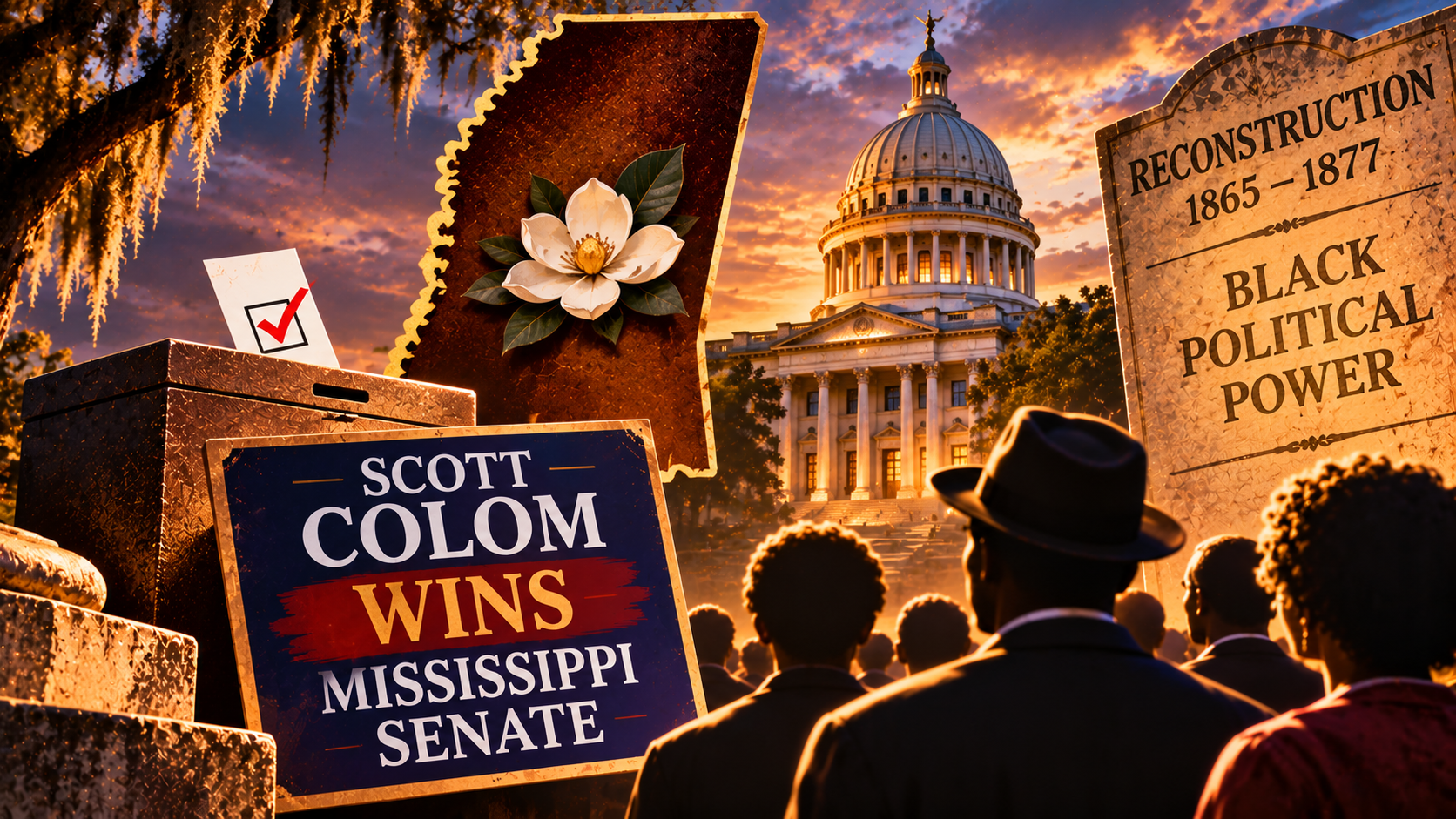
In Alabama, Democratic Representative Shomari Figures won reelection in a district redrawn to favor Republicans. In North Carolina, Democratic Representative Don Davis defeated another Republican challenge despite changes intended to make his district more competitive for the GOP.
Both victories were part of a broader Democratic resurgence across the South, where Black voter participation and declining Republican turnout helped produce results that challenged conventional political expectations.
Republicans controlled the lines on the map. But they couldn't control what voters did when they reached the ballot box.
Alabama: Shomari Figures Wins in a District Redrawn Against Him
Alabama's 2nd Congressional District became one of the clearest examples of the limits of partisan redistricting.
After the Supreme Court's 2026 decision in Louisiana v. Callais, Alabama moved forward with congressional boundaries that reduced the Black voting-age population of Figures' district from approximately 49% to just under 40%.
The changes incorporated more Republican-leaning territory, creating what many observers considered a favorable opportunity for the GOP.
Figures, first elected in 2024, faced Republican state Representative Rhett Marques.
But on election night, Figures defeated Marques. Early Associated Press returns reported by the Alabama Reflector showed Figures leading approximately 55% to 45%.
Marques conceded.
Figures had campaigned on healthcare, affordability and economic opportunity, while also criticizing the redistricting effort.
The election demonstrated something important: reducing the percentage of Black voters in a district does not automatically eliminate their political influence, particularly when turnout, coalition-building and candidate appeal shift the electorate.
North Carolina: Don Davis Survives Another Republican Redistricting Effort
A similar story unfolded in northeastern North Carolina.
Republican lawmakers redrew the state's 1st Congressional District with the intention of improving their chances of defeating Democratic Representative Don Davis.
Davis faced Republican Laurie Buckhout in a rematch of their 2024 contest.
According to WRAL's November 4 reporting, Davis led Buckhout by approximately 8,500 votes, 49.4% to 47.3%, with all precincts reporting at that time.
Davis won a third term.
His victory was particularly significant because the district has a long history of Black congressional representation, dating to Eva Clayton's election in 1992.
Davis, a moderate Democrat and U.S. Air Force veteran, emphasized his rural eastern North Carolina upbringing and local concerns.
His campaign was not simply a referendum on redistricting. It also involved economic issues, his constituent relationships and a national political environment unfavorable to Republicans.
That distinction matters. A district can be drawn to favor one party without guaranteeing that party's candidate will win.
The Numbers Behind the Southern Democratic Surge
The evidence extends beyond individual congressional contests.
A November 13 NPR analysis examined voter turnout across Louisiana, Mississippi, Alabama, Georgia, South Carolina and North Carolina.
It found that turnout declined by approximately 19% in counties that supported Kamala Harris in 2024, compared with a 26% decline in counties that supported Donald Trump.
Across those six states, NPR calculated an average electoral shift of approximately 22 percentage points toward Democrats, compared with about 14.5 points nationally.
The analysis also found that majority-Black counties retained turnout at approximately 85% of their 2024 levels, compared with approximately 76% in majority-white, non-Hispanic counties.
These figures do not represent 85% or 76% of all eligible voters casting ballots. They compare 2026 participation with the higher-turnout 2024 presidential election.
Political analyst G. Elliott Morris separately identified a particularly strong relationship between counties' Black eligible-voter populations and turnout retention in several Deep South states.
In Alabama, he reported that Democratic straight-ticket voting nearly doubled compared with 2022 across 14 counties entirely within Figures' district.
The Democratic resurgence was driven by two related developments: stronger relative participation in Democratic-leaning communities and a sharper drop in Republican participation.
Neither factor should be ignored.
The Voting Rights Act and the Political Backlash
The redistricting fights followed the Supreme Court's ruling in Louisiana v. Callais, which weakened important protections against racial vote dilution under Section 2 of the Voting Rights Act.
Republican-controlled state legislatures subsequently pursued new congressional maps that reduced the electoral influence of Black voters in several districts.
For Black Americans in the South, these disputes involved more than ordinary disagreements about district boundaries.
The Voting Rights Act of 1965 was enacted after generations of discriminatory practices prevented Black citizens from exercising political rights guaranteed under the Constitution.
Its protections helped make meaningful Black representation possible in communities where that representation had historically been denied.
The 2026 redistricting disputes therefore occurred against a specific historical backdrop.
Some political analysts have suggested that efforts to weaken Black electoral influence helped motivate higher participation among Black voters.
That explanation is plausible and supported by the geographic turnout patterns.
However, the available data cannot establish precisely how many voters participated because of the Supreme Court decision or subsequent redistricting. Opposition to President Trump, economic concerns, individual candidates and local organizing also mattered.
What National Democrats Should Learn
One of the recurring problems in national Democratic politics is the assumption that some Southern communities are too Republican to justify sustained investment.
The 2026 elections challenge that conclusion.
The victories in Alabama and North Carolina were not produced simply by national television advertising or a favorable political environment.
They required viable candidates, existing relationships, local organizing and voters who believed their participation could make a difference.
The results also demonstrate why national political organizations should not treat Black Southern voters merely as a dependable voting bloc that can be activated every two or four years.
Communities need sustained political attention, credible candidates and a role in shaping the policies being offered.
Black political participation is not something a party owns. It is political power that communities exercise, and that power must be earned and maintained through representation.
A Victory Is Not the Same as a Permanent Protection
There is another lesson that should not be overlooked.
The fact that Figures and Davis prevailed does not mean that restrictive redistricting efforts are harmless.
District boundaries can still make elections more difficult, increase campaign costs and reduce opportunities for communities to elect their preferred representatives.
A favorable national political environment can help candidates overcome those disadvantages in one election without guaranteeing similar results in the next.
The Voting Rights Act remains important regardless of which party wins a particular race.
The Bigger Picture
The 2026 midterms demonstrated that Southern Black voters remain an essential force in American electoral politics.
They also demonstrated that voters are not passive participants in a process controlled entirely by legislators, political consultants and party organizations.
Maps matter. Laws matter. Campaign resources matter.
But so do organization, turnout, persuasion and the relationships candidates build with the communities they seek to represent.
Alabama and North Carolina showed that drawing a more favorable district is not the same thing as winning an election.
The question for Democrats now is whether they recognize these victories as opportunities for sustained investment in the South—or treat them as temporary successes to celebrate before returning to politics as usual.
Sources
- - Associated Press — Black voters help propel Democrats in sweeping midterm victories
- - Alabama Reflector — Shomari Figures wins reelection despite redistricting
- - WRAL — Don Davis defeats Laurie Buckhout in North Carolina
- - NPR / WUNC — Two turnout trends explain the Southern election results
- - G. Elliott Morris — Turnout among Black voters surged in the Deep South
From the Floor
0 comments. Link a source for any factual claim. Read the guidelines.
No comments yet. Start the conversation.